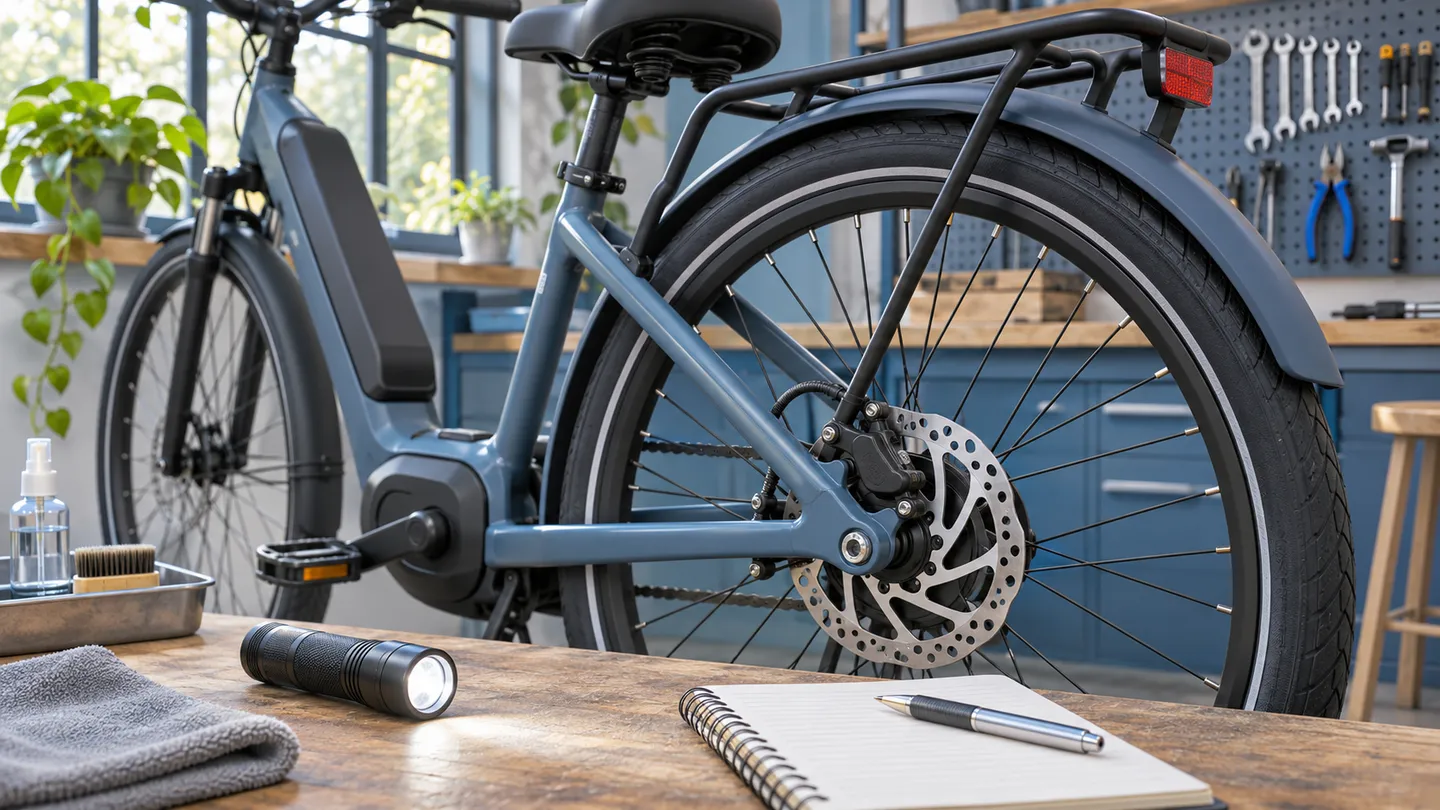

Reliable brakes matter on every bike ride, whether your e-bike is carrying a work bag or taking you through stop-and-go traffic. A short check before setting out can help you notice a lever, wheel or brake that no longer behaves normally. It does not replace the service schedule or repair instructions for your particular bike and brakes.
Disc brake designs vary. The manufacturers' manuals govern your equipment. If braking feels unsafe, a lever reaches the handlebar, you see a fluid leak, or you suspect damaged or contaminated parts, do not ride until a qualified bicycle mechanic has checked the system.
Start with the bike stable and switched off
Place the bike on level ground where it cannot roll into traffic. Switch off the electrical assistance and follow your owner's instructions before inspecting the bike. If the battery is removable, follow the maker's guidance about removal for service. Keep fingers, clothing and tools clear of the rotor and wheel, particularly while either is moving. A disc rotor can also become hot after braking, so let it cool before looking closely.
Identify whether the bike uses hydraulic or cable-operated disc brakes. The visible parts and service needs differ. Some e-bikes also have brake sensors connected to the motor system; consult the bike maker rather than disconnecting or adjusting electrical components during a routine check.
Check each lever separately
With the bike stationary, squeeze one brake lever and then the other. Each lever should operate smoothly and feel consistent with the bike's normal, properly serviced condition. Check that it does not contact the handlebar or grip, and that it returns as expected. The exact lever feel depends on the system and setup, so the manual or your mechanic can help establish what is normal for your model.
A sudden change in lever travel, a spongy feel on a hydraulic system, or a lever that does not return warrants attention. Do not assume that tightening a visible screw will fix it. The cause may involve the lever, hose, cable, caliper or another part. A shop can diagnose the system and perform any adjustment or hydraulic service required by the manufacturer.