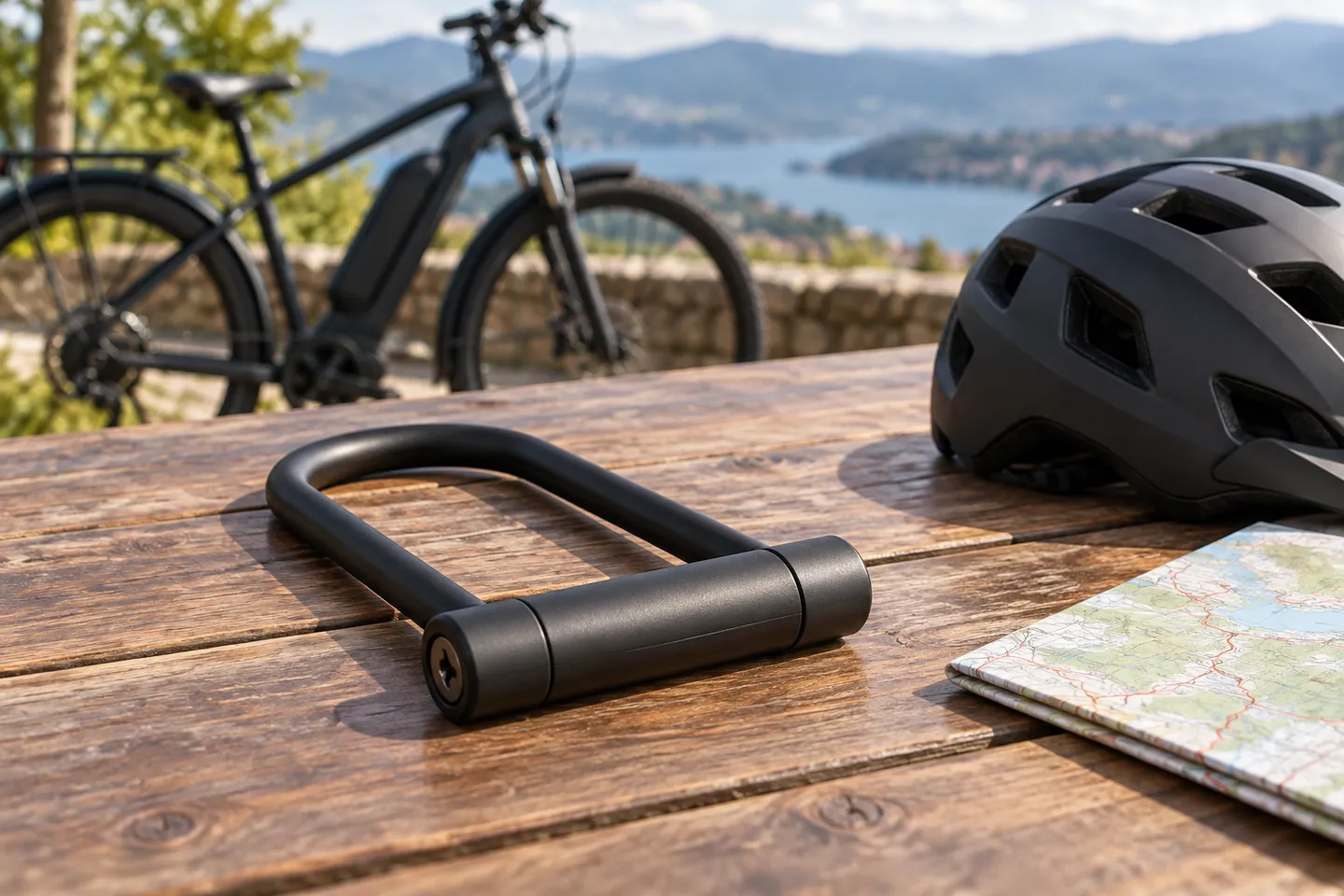
An e-bike can make a short stop easy, but parking deserves a plan before you leave home. A lock, a suitable fixed object and a few minutes to secure removable parts can reduce opportunities for theft. No lock or parking place can guarantee security, so combine the steps below with the instructions for your bicycle, lock and destination.
Start by identifying where you will park, how long you expect to be away and what you can carry inside. Practice the procedure at home so that the lock actually fits your frame and the type of rack you expect to use. If the only available rack obstructs an entrance or forces you to damage a cable, find a different permitted place.
Choose a suitable fixed object
Look for a sturdy, permanently installed bicycle rack or another object where locking is allowed. Check that the rack is securely fixed and has no open end over which a locked bicycle could be lifted. Choose a visible, well-lit location when possible and follow local rules and property instructions.
Trek's e-bike FAQ recommends a well-lit parking area and securing the frame to the rack, rather than locking only a removable wheel. Its electric bicycle owner's manual also advises locking the bicycle to a fixed object and taking care not to damage electric system cables when using a rack.
Check how the bicycle rests before leaving it. It should not be able to fall into a walkway, roll into another bicycle or rest on a derailleur. Avoid pulling cables tight or trapping them between the rack and frame. A heavy e-bike may need more room to maneuver than an ordinary commuter bicycle.
Fit the lock around the frame and anchor
Follow your lock manufacturer's instructions for closing and checking the lock. Pass the locking component through a substantial part of the frame and around the fixed anchor. A lock through only a wheel may leave the frame available to remove. Confirm that the lock has fully latched, then give it a gentle check as directed by the maker.
The dimensions of your bicycle and rack determine whether a U-lock, chain or another type fits. Measure the usable opening and consider the frame tube's shape before buying. A frame cover can protect the finish where the maker allows it, but avoid placing pressure on wiring, hydraulic lines or battery connections. Do not use a cable or electrical wire as the point that holds the bicycle to the rack.
Think about the wheels as well. Depending on the bicycle and lock, a second suitable lock or a separate wheel-security device may be useful. Follow each device's instructions and avoid making claims that a particular arrangement cannot be defeated. If a lock is damaged or does not close consistently, stop using it and contact the manufacturer.
Check the battery and display
E-bikes vary: some have a removable battery, some have a battery integrated into the frame, and some have a detachable display. Trek advises locking the battery in place and removing the remote or display where applicable; its FAQ also suggests bringing an easily removable battery inside. Use the procedure for your own model and never force a battery or connector.
If you remove the battery, turn the system off first and follow the manufacturer's handling instructions. Carry it in a suitable protective bag and keep it away from water, extreme temperatures and impacts. Do not leave exposed electrical contacts where they can be damaged. Our battery key replacement checklist covers information to keep if you use a keyed battery.
Take detachable lights, bags, computers and other small accessories with you where practical. For fixed accessories, check the maker's mounting and security instructions. Keep the lock key separate from the bicycle and avoid leaving a spare attached to the frame or battery.
Record details before the ride
Write down the bicycle's serial number, make, model and distinguishing details. Store the record somewhere separate from the bicycle, along with proof of ownership and clear photographs. Trek's manual recommends recording the serial number and registering the bicycle. Check whether a registration service is available for your area and keep your contact details current.
If you have insurance, read the policy's requirements for locks, overnight storage and reporting. Conditions differ, so a general checklist cannot tell you what your policy covers. Keep the lock's key number and purchase documentation in a safe place where they can be found if needed.
Before leaving and before riding
Walk around the parked bike once. Check that the frame is secured to the fixed object, the lock is closed, the battery is secured or removed as intended, and bags or lights have not been left behind. Take a quick photograph of the parking location if that helps you find it later, without disclosing sensitive location information publicly.
When you return, inspect the lock and bicycle before riding. Reinstall any removed battery or display according to the manual, check that it is seated and locked, and perform the bicycle's normal pre-ride safety checks. If the frame, cables or lock appear tampered with, do not assume the bike is safe to ride; have a qualified shop inspect it.
Frequently asked questions
Is locking just the front wheel enough?
Trek recommends securing the frame to the rack because wheels can be removable. Consider how to secure both frame and wheels with compatible equipment.
Should I remove every e-bike battery when parking?
Battery designs differ. Follow your bicycle manufacturer's instructions and take an easily removable battery with you when appropriate.
Does a strong lock eliminate theft risk?
No. A lock is one part of a broader parking plan; location, correct use and protection of removable components also matter.
The cover is an AI-generated editorial illustration, not an instruction diagram or photograph of a specific product.