Bike Helmet Fit: A Pre-Ride Checklist for E-Bike Riders
Gescoot Team
November 1, 2026
5 min read
A helmet is most useful when it is suitable for the activity, fits the rider and is adjusted according to its instructions. Before an e-bike ride, take a moment to check the helmet itself, its fit and the straps. A familiar helmet can still need adjustment after a change in hairstyle, headwear or the person using it.
This checklist does not replace the helmet manufacturer's manual, applicable local rules or professional fitting advice. No helmet can prevent every injury.
Choose the right helmet and size
Start with a helmet intended and certified for the activity and market where you will ride. Check the product label, certification information and the instructions for your actual model. E-bike requirements can differ by jurisdiction and bicycle class, so confirm the rules that apply to your route.
Measure your head as the helmet maker directs and compare the result with its own size chart. A model's size labels are not a universal fit guarantee. Try the helmet on if possible and check that the shell shape is comfortable without relying on an excessively tight adjustment system.
Trek's helmet fitting guide explains how its fit and strap adjustments should work. Your own helmet's instructions take priority for its particular design. If you cannot achieve the fit described by the manufacturer, ask a knowledgeable retailer for help.
Position it correctly
Place the helmet on your head in the position specified in its manual. It should sit level and protect the forehead without blocking your view. Do not push it far back simply to make room for a cap or tilt it forward so far that it interferes with vision.
Check that the helmet rests comfortably and that the padding and fit system are properly installed. If you use glasses, confirm that they fit without pushing the helmet out of position. Avoid adding thick accessories under the helmet unless the manufacturer says they are compatible.
Adjust the rear fit mechanism according to the manual. It should hold the helmet securely without creating painful pressure. A dial can refine a suitable helmet's fit, but it cannot turn an incorrectly sized or shaped shell into a suitable one.
Adjust the straps and buckle
Arrange the side straps and dividers as directed by the manufacturer. They should lie flat and avoid twisting. Fasten the buckle and check that it is properly engaged. Adjust the chinstrap so the helmet remains secured while you can move and breathe comfortably.
Trek describes checking that its strap dividers sit just below the earlobes and testing that the fastened buckle does not pull apart. Follow the details for your own helmet, since buckle and divider designs differ. Secure any loose strap end with the supplied keeper as instructed.
Repeat the fitting check whenever another person uses the helmet. Children and adults can require different models and sizes; do not rely on a single adjustment for everyone in a household.
Test stability before riding
With the retention system and chinstrap fastened, use the fit test described in the manual. Trek advises gently moving the helmet front and rear to check that it does not obscure vision or expose the forehead. If it shifts excessively, revisit the adjustment and sizing instructions.
Do not over-tighten to compensate for a poor shell fit. Check again after putting on the eyewear and clothing you expect to use. If the helmet is uncomfortable or will not stay in the correct position, consult the manufacturer or a qualified retailer before riding.
Keep your field of view clear in all directions. Lights, cameras and other attachments should be used only where compatible with the helmet and manufacturer instructions. An accessory should not compromise the shell, straps or retention system.
Inspect condition and history
Look for visible cracks, crushed or loose material, damaged straps, worn buckles or missing padding. Follow the maker's inspection and replacement guidance. Damage is not always visible, and a helmet involved in an impact may require replacement even when the exterior looks acceptable; consult the specific manufacturer's instructions.
Be cautious with a helmet whose history is unknown. Avoid modifying the shell, drilling holes or using cleaners and adhesives that the maker does not approve. Store the helmet as directed, away from conditions that could damage its materials.
Check the manufacturing date and the manufacturer's recommended service life. Time, heat, use and impacts can affect the equipment. If you are unsure about its condition or history, ask the manufacturer rather than assuming it remains protective.
Make it part of a wider ride check
The helmet is one part of a safer ride. Check the bicycle's brakes, tires, lights and other equipment according to its manual, and choose a route and speed appropriate for the conditions. Make yourself visible and comply with local traffic rules.
Carry a suitable lock and plan where you will park. If a helmet needs cleaning after a wet ride, use only the method recommended by the maker and let it dry before storage. Visit the Gescoot blog for more e-bike preparation guides.
Frequently asked questions
Can I use the same helmet for every activity?
Not necessarily. Check its intended activity, certification and the rules in your location.
Is a tight dial enough if the shell is too large?
No. The helmet must fit as described by its manufacturer; the adjustment system is not a substitute for correct sizing.
Should I replace a helmet after an impact?
Follow the manufacturer's instructions. Damage may not be visible, so do not judge solely by the outer appearance.
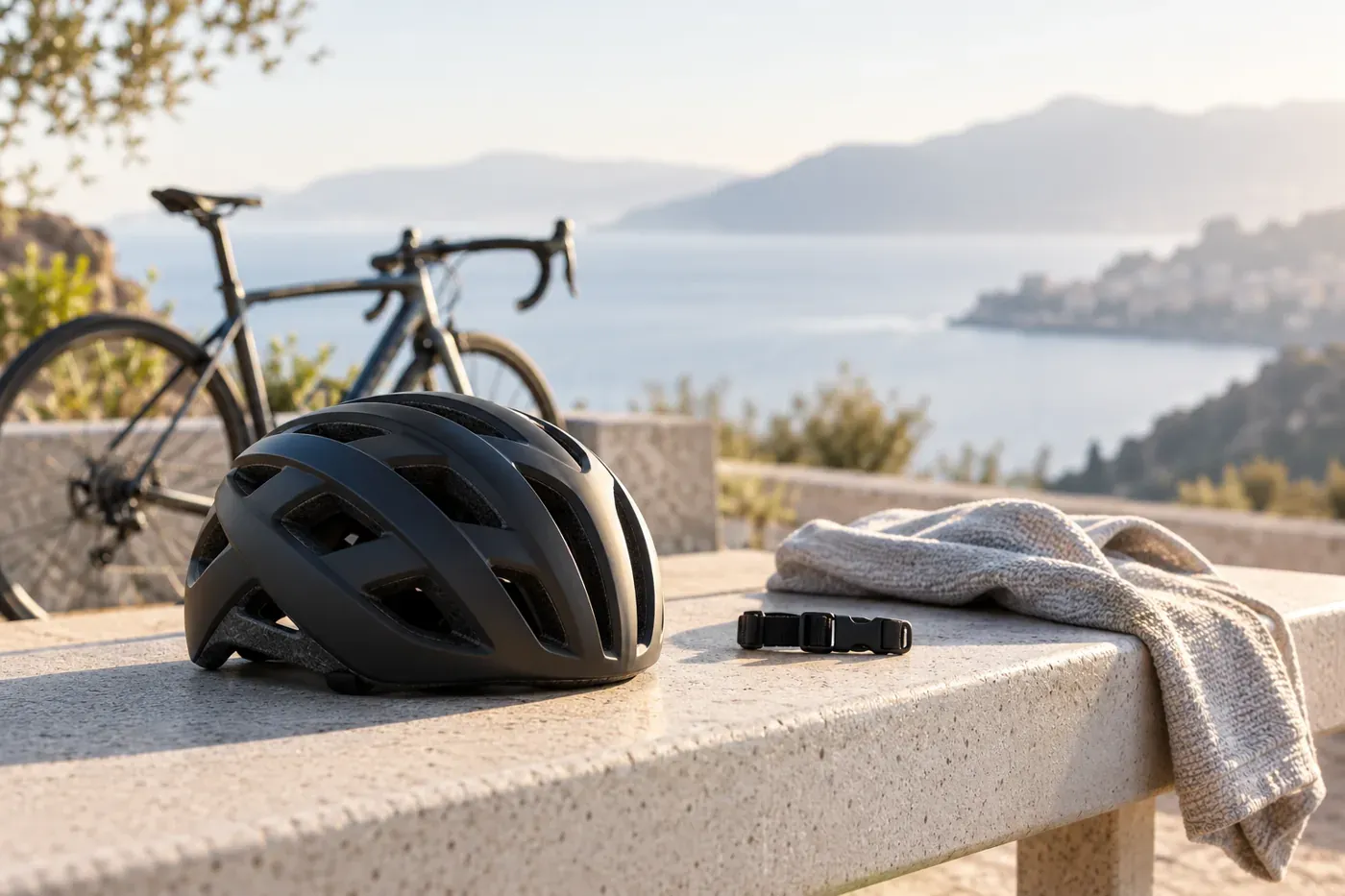
The cover is an AI-generated editorial illustration, not a photograph of a specific helmet.