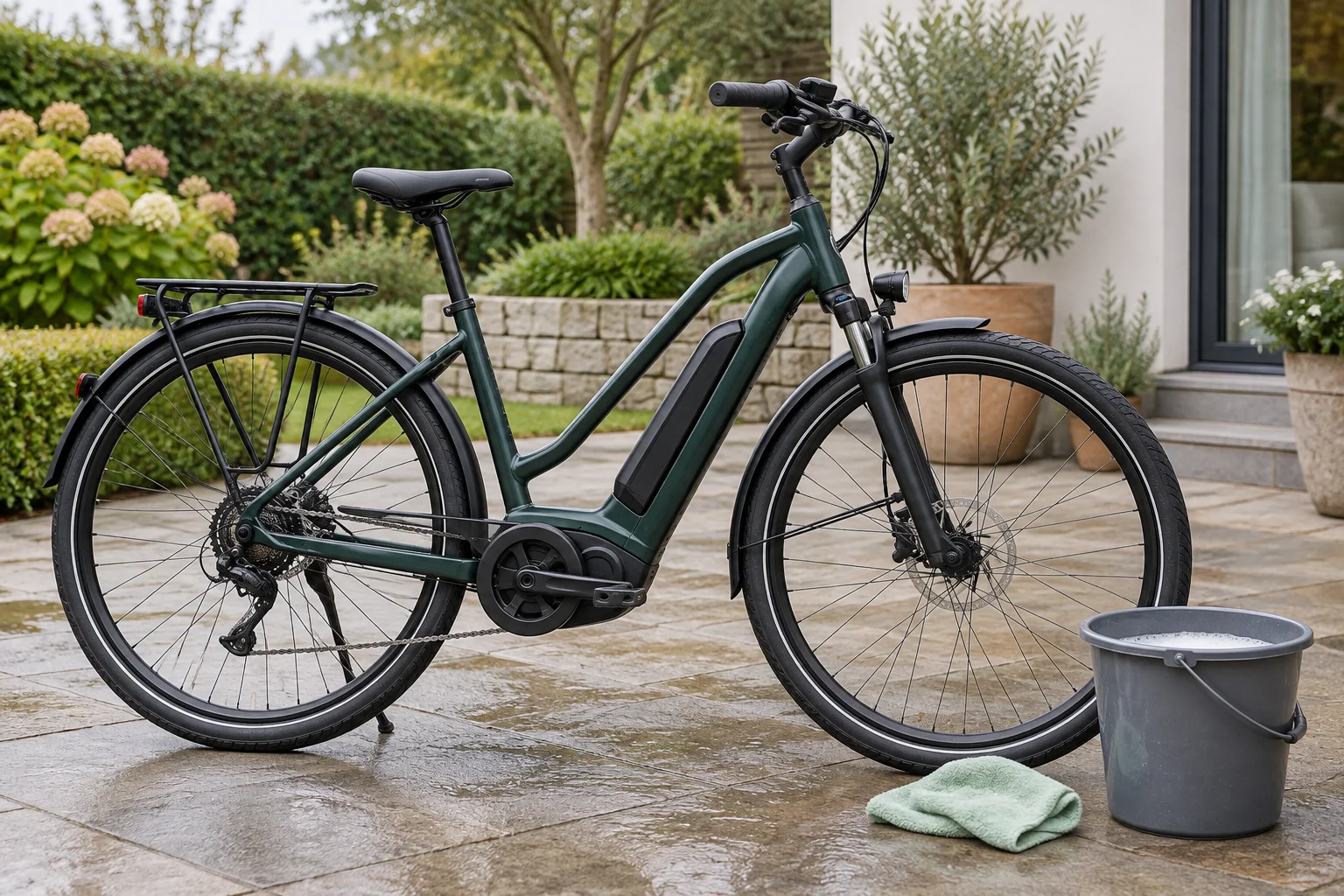
A clean electric bike is easier to inspect before the next ride. The useful question is not how to make it spotless as quickly as possible, but how to remove everyday dirt without sending water or cleaning products into places they do not belong. Start with your bicycle and electrical-system manuals, then build a small routine around the parts you actually need to clean.
This guide covers an ordinary wipe-down after dusty commutes or light road grime. Flood exposure, electrical faults, damaged wiring, and heavily contaminated brakes need a different response: stop using the bike and ask an appropriate service technician for guidance.
Start with the instructions for your exact bike
Find the cleaning section for the complete bicycle as well as its motor, battery, and display. Different manufacturers can give different instructions for removable batteries, fixed batteries, connectors, and cleaning products. A generic checklist should never replace those instructions.
Bosch's e-bike maintenance guidance advises against steam jets and high-pressure cleaners because water can reach sensitive components. Its battery-care guidance also says to remove the battery before cleaning a compatible bike and keep direct water jets away from the battery. Apply the removal instruction only when your own battery is designed to be removed by the rider.
Prepare a small cleaning station
Choose a stable place where the bicycle cannot roll away or fall over. Switch the electrical system off and disconnect the charger before starting. Follow the manual for any removable battery or display; leave an integrated battery alone if removal is not part of normal owner maintenance.
Have two clean, soft cloths, a gentle brush, a small container of water, and an approved bicycle cleaner ready. Keep one cloth for the frame and another for final drying. Use cleaning products only on the surfaces permitted by their instructions and the bicycle manufacturer.
Think about the workspace as well as the bike. Put the charger somewhere dry, away from the cleaning area. Keep loose tools and cables off the floor so you can walk around both wheels without stepping over them.
Work on the frame in manageable sections
Remove loose dirt gently before rubbing a painted surface. Use a lightly dampened cloth and work on one small section at a time. If the cloth becomes gritty, rinse or replace it rather than dragging the same dirt across another section.
A useful order is the handlebar and top of the frame, then the lower frame and mudguards. This lets you see what has been cleaned and which areas still need attention. Keep electrical openings, connector recesses, and charging ports out of the wet cleaning path. Do not pour a bucket over the bicycle or use immersion as a shortcut.
You do not need to chase every mark during one session. Persistent deposits are a reason to check the approved cleaning method, not to reach immediately for a stronger solvent or an abrasive pad.
Keep drivetrain and brake work separate
Treat the drivetrain as its own maintenance task. A chain and a belt can require different care, so identify which system your bike uses before applying a product. Follow that component manufacturer's instructions for cleaning and lubrication.
Keep chain lubricant, polish, and general-purpose spray away from brake pads and braking surfaces. Use separate tools and cloths for dirty drivetrain work. If the brakes become contaminated or braking feels different afterwards, stop and arrange inspection rather than attempting to hide the problem with more cleaner.
When comparing bikes for easy everyday care, look at access to the drivetrain, mudguards, and battery attachment. You can browse the Gescoot e-bike collection and check the available product details alongside each manufacturer's maintenance instructions.
Dry, inspect, and put the bike back together
Wipe the cleaned surfaces with a dry cloth and give the bike time to dry as instructed. Before reinstalling an owner-removable battery, check that the relevant mounting area is clean and dry. Do not probe electrical contacts or open sealed components to speed up drying.
Use the final inspection to look for loose accessories, damaged cable covers, tire damage, and anything that changed during the clean. Refit removed items according to the manual. Before returning to traffic, confirm that the controls, lights, and brakes work normally in a suitable safe area.
A brief note on your phone can make the next clean simpler: record the approved cleaner, any parts needing service, and the instructions you followed. That is more useful than trying to remember which spray happened to be nearby last time.
Frequently asked questions
Can I use a pressure washer from farther away?
Do not assume distance makes a pressure washer suitable. Follow your bicycle and electrical-system instructions; Bosch explicitly advises against high-pressure cleaning. A careful manual wipe-down avoids relying on an unverified pressure or distance.
Should I remove an integrated battery?
Only remove a battery through the rider procedure specified by the manufacturer. If it is not designed for routine owner removal, do not dismantle the frame or electrical system to clean it.
Does every clean require chain lubrication?
Check the drivetrain manufacturer's instructions and the condition of the drivetrain. A frame wipe-down and a chain-service session are different tasks, and a belt drive should not be treated as a chain.
The cover is an AI-generated editorial illustration, not a photograph of a specific bike model.