Folding Scooter Latch: A Pre-Ride Locking Checklist
Gescoot Team
November 5, 2026
5 min read
A folding electric scooter can be convenient to store or carry, but the folding mechanism must be secured before every ride. Latches and safety locks vary by model, so start with the owner's manual and use the exact steps and indicators it describes. A stem that seems upright is not, by itself, proof that the mechanism is locked.
This checklist focuses on a visual and functional check, not repair or modification. Turn the scooter off and place it on a stable surface before folding or inspecting it. If any part is damaged, loose or cannot be locked as instructed, do not ride; contact the manufacturer or a qualified service technician.
Locate the parts in your manual
Identify the folding joint, release lever, safety latch or button and any markings for the locked position. Some scooters use a lever and a separate latch; others use a different sequence. Keep fingers away from pinch points and follow the illustrated procedure for your exact model.
The Segway E3 series manual instructs owners to confirm its folding latch is locked before riding and to stop if it cannot be locked. NIU's scooter FAQ describes a different sequence for its models. These examples show why a familiar-looking lever is not enough to identify the correct process for every scooter.
If you are borrowing or buying a used scooter, obtain the correct manual before using the folding mechanism. Do not rely solely on a seller's demonstration or a video for another model. Check the scooter's model identification and make sure replacement parts, if any, are specified as compatible.
Unfold on a stable surface
Power off the scooter and unfold it only as directed by the maker. Keep the deck and wheels supported and keep hands clear of the moving joint. Make sure cables are not trapped, sharply bent or pulled by the stem as it moves. If anything resists normal movement, stop and consult the manual rather than forcing the mechanism.
Close the release lever and engage any separate safety lock in the required order. Use the maker's own diagrams and indicators to confirm the final position. A click can be one indicator on certain models, but do not treat a sound as a universal substitute for the complete check. Confirm that all prescribed parts are in their locked positions.
Inspect the joint and locking parts
Look for visible cracks, bends, missing parts, abnormal gaps, damaged cables or debris that could prevent proper engagement. Check for obvious looseness as directed in the manual, without dismantling the mechanism or changing adjustments. Normal checks vary by design; never improvise a force test or overtighten hardware.
If the latch will not close, will not remain closed or appears damaged, stop using the scooter. Do not secure it with tape, cable ties or another improvised restraint. A qualified technician or manufacturer can identify the correct repair and parts. Record the model and a description of the issue for the service request.
Check the rest of the scooter
The folding latch is one part of a complete pre-ride inspection. Check the brakes, tires, lights and other controls according to the manual. For pneumatic tires, confirm pressure with a suitable gauge and the exact model's specification; for solid tires, check condition and wear instead.
Wear an appropriately fitted helmet and follow local rules and the manufacturer's riding guidance. Check the route and conditions before setting out. A properly locked stem does not make an otherwise damaged scooter safe, and a general article cannot replace hands-on inspection or training.
Fold and carry without stressing the mechanism
When the ride is finished, power off the scooter and follow the manual's folding sequence. Engage any carrying hook or retention mechanism as instructed before lifting. Keep the folded scooter clear of other people and use a safe lifting method appropriate to its weight; avoid carrying it by a part the manufacturer does not designate for that purpose.
During transport, protect the scooter from impacts and prevent it from shifting. After unfolding it again, repeat the complete locking check. A mechanism that was secured before carrying may have moved during transport.
Keep a simple maintenance record
Note any change in how the latch closes, unusual movement or recurring difficulty. Check the manufacturer's maintenance schedule and arrange service when needed. Do not apply lubricants, replace fasteners or adjust tension unless the manual specifically directs you to do so and you have the required skills and tools.
If a scooter has been dropped, involved in a collision or exposed to conditions outside its instructions, have it assessed before further use. A visible inspection cannot rule out every internal problem.
Frequently asked questions
Is hearing a click enough to confirm the latch is secure?
Not necessarily. Follow all locking steps and indicators in your model's manual.
Can I ride if the lever feels loose?
Do not ride if the mechanism cannot be secured as instructed. Consult the maker or a qualified technician.
Should I recheck the latch after carrying the scooter?
Yes. After unfolding, complete the manufacturer's locking and pre-ride checks again.
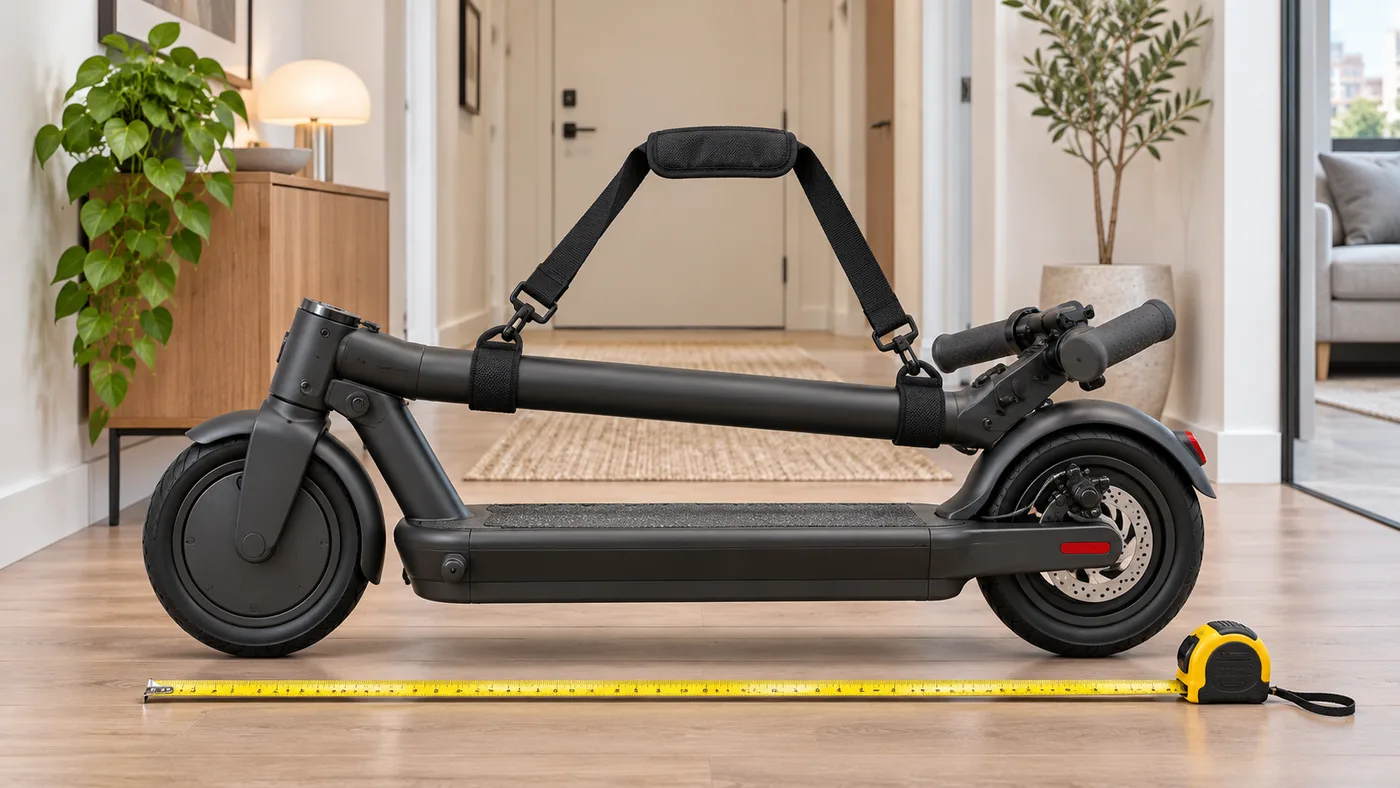
The cover is an AI-generated editorial illustration, not a product photograph.