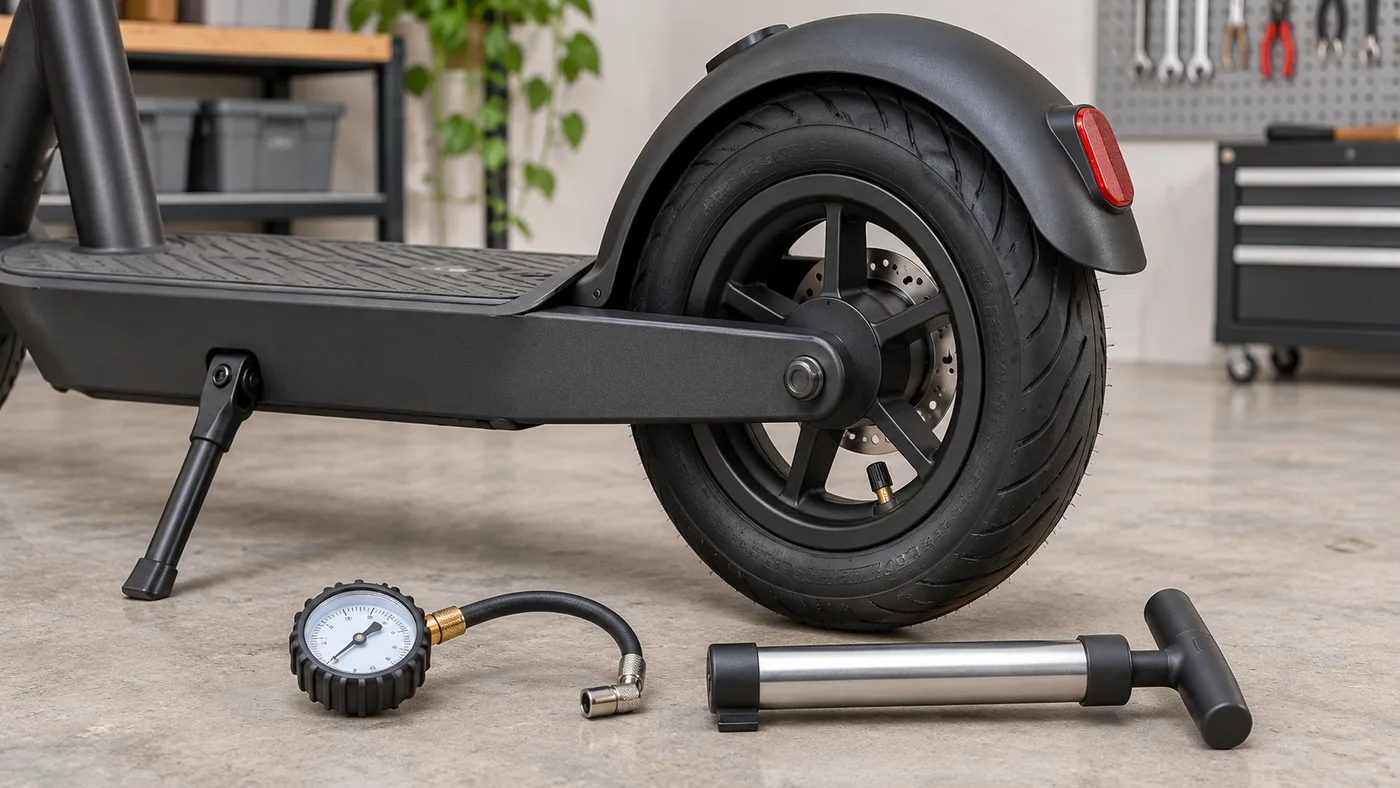

Pneumatic tires need the pressure specified for the scooter and tire, not a number borrowed from another model. Before a ride, check the tire condition and use a suitable gauge according to the manufacturer's instructions. Correct pressure supports the tire's intended shape and handling, while an underinflated or damaged tire can make a scooter unsafe to ride.
This guide is a checklist for owners of scooters with air-filled tires. It does not apply to solid tires that have no inflation valve. Turn the scooter off and place it on a stable surface before inspection. If you find a cut, exposed cord, damaged rim or a tire that will not hold pressure, do not ride; consult the manufacturer or a qualified technician.
Find the correct specification
Read the manual for your exact scooter and check any tire-sidewall information that the manufacturer tells you to use. Front and rear tires may have different requirements. The number on a generic pump, a friend's scooter or an online listing is not a substitute for the specification for your own equipment.
For illustration, Segway's D28U product manual lists 40–45 psi for that model, while NIU's kick scooter FAQ provides a different range for the scooters it covers. These are examples, not universal settings. Use the current instructions and markings applicable to your scooter and replacement tire.
Check the units before you start. A gauge may display psi, bar or both. Make sure you are reading the same unit used in the specification, and do not exceed the applicable limits. If the manual and tire markings seem inconsistent, ask the manufacturer or a technician rather than guessing.
Inspect the tire before attaching a pump
With the scooter powered off, look at the tread and sidewalls for embedded debris, cuts, bulges, cracking or uneven wear. Check that the wheel and valve appear undamaged and that the valve cap is present. Rotate the wheel only as permitted by the manual and keep fingers clear of moving parts and brakes.